
Rental Scams & How To Avoid Them in Vietnam
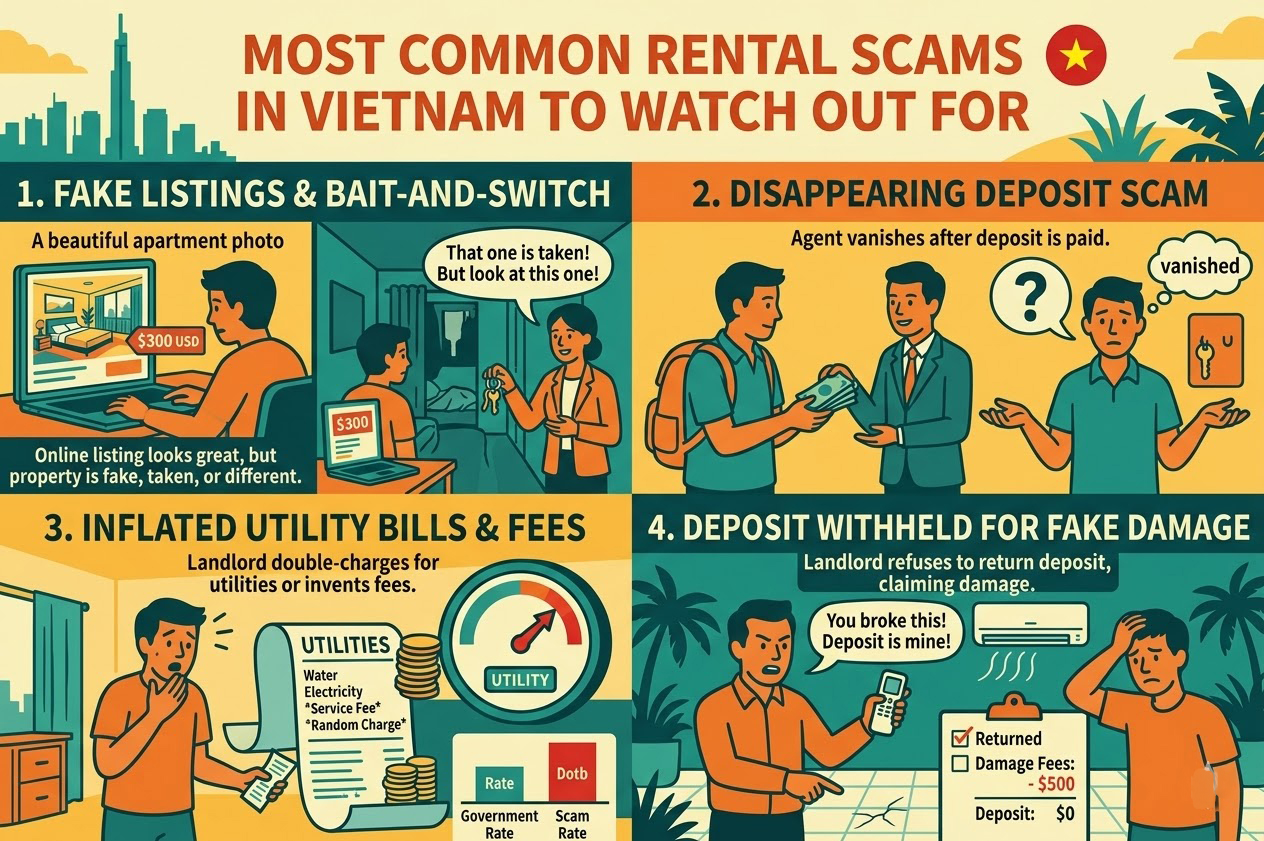
Renting in Vietnam can be an amazing experience, but every year, thousands of people—locals and expats—get scammed. Scammers constantly invent new tricks, and in 2025, the rental market is still full of traps for the unsuspecting. The good news: most scams can be avoided with common sense and good habits. Here’s how to protect yourself.
Why Rental Scams Are Common
Vietnam’s rental market is fast-moving. Many homes get rented in days. There’s no strict regulation of online listings. Facebook groups, Zalo, Telegram, and random websites are full of “agents” and “landlords” trying to fill rooms. Most are legit, but some are hoping to cash in by scamming you.
Factors:
-
High turnover of short-term renters.
-
Easy online listings, little official oversight.
-
Language barriers.
-
Lack of true exclusivity—agents often post listings they don’t truly control.
-
Frequent cash deposits and informal contracts.
Most Common Rental Scams in Vietnam
1. Fake Listings & Bait-and-Switch
You see a gorgeous apartment online for cheap. The “agent” says it’s taken but has others (more expensive or worse). Sometimes, the fake property never existed—they just wanted your attention.
2. Disappearing Deposit Scam
Landlord/agent asks for a deposit, promising to “hold” the apartment. You send cash/bank transfer. Suddenly, they vanish. No contract, no keys, no reply. This is depressingly common.
3. Inflated Utility Bills
You move in. Suddenly, your landlord hands you a bill for water or electricity that’s double the government rate or adds random “service fees.” They use fake meters or simply invent a number.
4. Deposit Withheld for Fake Damage
You leave and want your deposit back. Landlord claims you scratched the floor, broke the AC, etc.,—even if you didn’t. Sometimes they refuse to return anything, knowing most foreigners won’t fight.
5. Unverified Landlords
Scammer pretends to be the landlord or uses a friend’s ID to trick you. If you don’t check ownership papers, you’re at risk.
6. Unlicensed Agents
Random agents ask for a finder’s fee, deposit, or background check payment. They may vanish or offer a contract that has no legal standing.
Real Stories from Expats
-
“My friend lost $500 deposit on a place she never saw. The Facebook agent insisted ‘I need deposit now,’ then blocked her on Zalo after payment.”
-
“The landlord showed me fake bills every month. When I asked for originals, he threatened to kick me out.”
-
“Craigslist listing had pictures stolen from another legit website—when I tried to visit, they found excuses not to show me the apartment.”
Red Flags to Watch For
-
Price far below market.
-
“Urgency” (“send deposit now, or it’ll be gone!”).
-
No in-person viewing allowed.
-
Refusal to provide ID or property documents.
-
Only communicating via Facebook/Zalo—no phone calls, no video chats.
-
A contract you can’t read or is only in Vietnamese.
-
Demands for big upfront payments, “key money,” background check fees.
How to Avoid Rental Scams (Step-by-Step)
1. Always See the Property in Person
-
Never send money before you visit and inspect the apartment.
-
Use video calls if you’re abroad—walk-through tours only, never just photos.
2. Verify Ownership Documents
-
Ask for the “Pink Book” (Giấy chứng nhận): the property’s ownership certificate.
-
Check that the landlord name matches the contract and ID card.
-
If using an agent, request ownership papers tied to the property.
-
Take photos of IDs, ownership docs.
3. Insist on a Bilingual and Detailed Contract
-
Every agreement should clearly name tenant, landlord, rent, deposit, and duration—in English and Vietnamese.
-
Make sure you read every section. If unsure, use Google Translate or a local friend.
-
Include clear terms:
-
Deposit amount and return rules.
-
Move-in/move-out checklist.
-
Utility payment details (attach old bills as reference).
-
What counts as “damage” to justify deposit deduction.
-
4. Meet in a Public Place or at the Property
-
Don’t do deals in coffee shops or random offices.
-
Bring a friend or trusted local, especially for large payments.
5. Get Receipts for Every Payment
-
Never pay cash without a signed receipt.
-
Bank transfers should list apartment address and rental period.
-
Take screenshots, store everything in a shared cloud folder.
6. Join Trusted Facebook & Telegram Groups
-
“Expats in Ho Chi Minh City,” “Expats Hanoi,” “Vietnam Apartment Rentals”—these groups have admins and active vetting.
-
Post in groups asking for agent/landlord recommendations. People will warn you about scammers.
7. Watch Out for Fake Background Checks
-
Landlords don’t charge for “background checks.” If someone asks for money to check your history… walk away.
8. Utility Bills: Ask for Proof
-
Always request old government bills for the property before signing.
-
Pay direct to the provider if possible.
9. Use Notarized Contracts for Long-Term Rentals
-
For year-long stays, insist on notarization. This costs a little extra but makes legal action easier if you’re cheated.
How to Protect Your Deposit
Move-in inspection
-
Document everything. Take photos and videos on day one (timestamped).
-
Note any damage, wear, or problems in the contract.
During your stay
-
Promptly report issues to the landlord—in writing.
-
Pay all rent and utilities on time, keep receipts.
During move-out
-
Clean the property and invite the landlord for joint inspection.
-
Take photos, ask for a written agreement stating no damages.
If a landlord refuses to return a deposit
-
Stay calm, don’t threaten.
-
Show all evidence (photos, receipts, contract).
-
Ask for mediation—involving local police, friends, or group admins if needed.
-
Vietnamese law favors the documented renter if you have written evidence.
Extra Tools for Expats
-
Shared photo album (Google Photos, Dropbox) for all proof.
-
Trusted legal aid and English-speaking lawyers are now available in Ho Chi Minh and Hanoi—ask in expat groups for recommendations.
-
Some rental platforms offer secure deposits (use only well-known sites with verified reviews).
-
Ask for a notarized copy of landlord’s ID attached to property ownership certificate—this prevents most scams.
Frequently Asked Questions
Is paying a deposit before visiting normal?
No. Never do this.
My agent claims the contract is “standard” but only in Vietnamese. Is that OK?
No. Get a translation or don’t sign.
Landlord asks for “key money”—what is this?
Often a scam. Key money is not standard practice for apartments—ask for details and walk away if you feel pressured.
Who do I contact if I’ve been scammed?
-
Local police (bring a Vietnamese speaker)
-
Embassies and consulates
-
Admins of expat groups
Final Checklist Before You Sign
-
Visit apartment in person.
-
Verify ownership with “Pink Book.”
-
All payments documented; bank transfer when possible.
-
Insist on a bilingual contract.
-
Get receipts for every payment.
-
Always ask for old utility bills.
-
Join trusted expat groups for help.
Vietnam is a fantastic place to live, but only if you avoid the traps. Slow down, check everything, trust your instincts, and don’t let anyone rush you. Happy house hunting!